
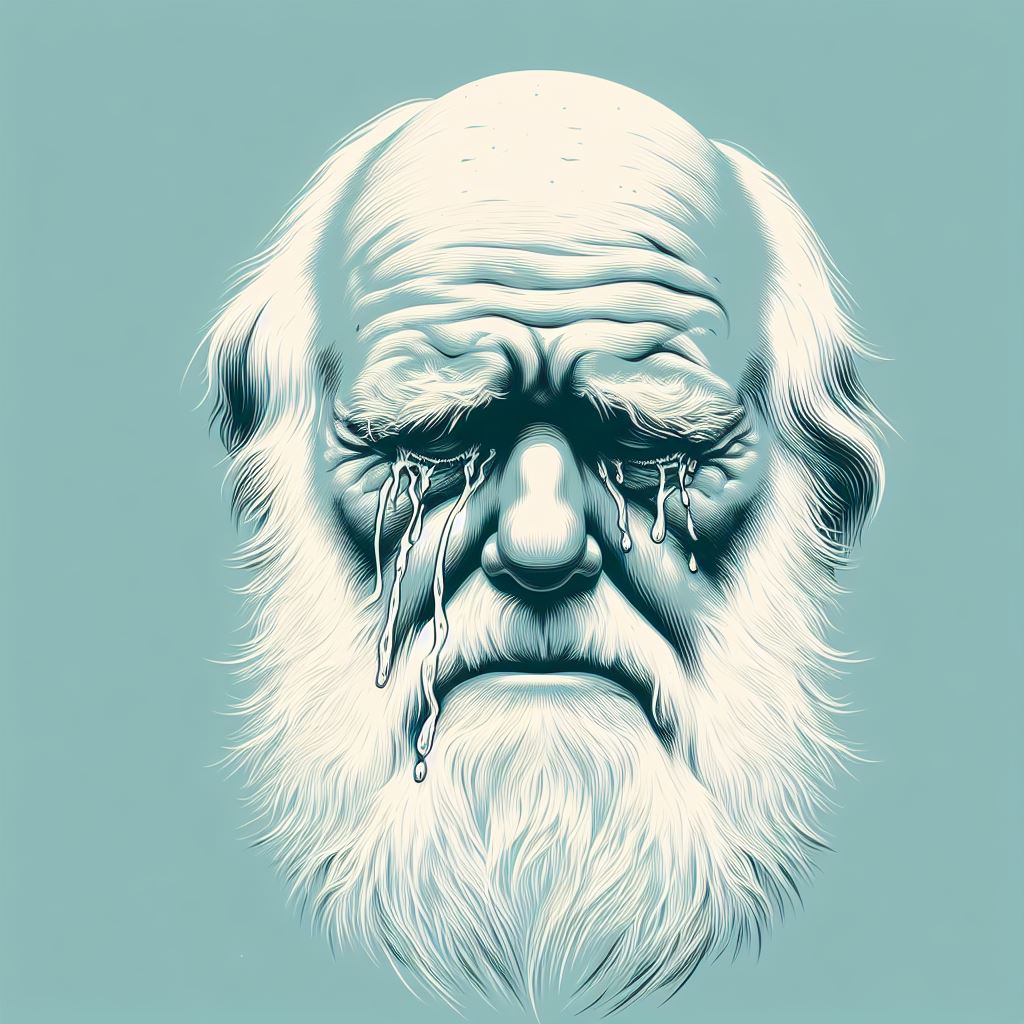
Since Charles Darwin it has been theorized that our emotions play a crucial role in adapting to our environment.
Since Darwin, and perhaps long before him, it has been theorized that our emotions play a crucial role in adapting to our environment. This means that emotions are not just an inconvenient byproduct of consciousness, but a form of higher cognition – an ability for living beings to experience their world in deeper and more complex ways.
Humans are a species that thrive on social relations, and our emotions become a gauge on morality and justice. They help facilitate our interactions by giving us clues on how to connect with others in meaningful and productive ways. When someone makes us feel bad our emotions tell us to ignore them, while when someone makes us feel good our emotions tell us to appreciate them.
Emotions however come in many different qualities, degrees, and intensities. While “positive” and “negative” are the broadest sense of emotions (and also the types most commonly researched), theorists have devised hierarchies and scales that range anywhere from 36 different types of emotions to 65 types to 135. These differences can often depend on the culture being studied, or the intentions of the reseachers to construct an emotional framework that fits their line of research. For example, Laros and Steenkamp often do emotional research related to consumer behavior.
Perhaps more important than how researchers conceptualize different emotions is how we experience them. You can probably reflect on some past experiences right now and write down a handful of common emotions: anger, disgust, fear, happiness, sadness, surprise, etc. You might also recognize that different experiences elicit different intensities of each emotion. Eating some ice cream might give you a mild sense of happiness, while winning the lottery would give you a much stronger sense of happiness. Researchers can try to measure this based on arousal response in the brain.
The first key to emotional intelligence is being able to identify these emotions while they occur. This requires some sense of reflection or introspection into our internal state. While this seems like commonsense, many people can go about their day being grumpy without ever consciously thinking, “Boy, I’m really grumpy today.” Instead we experience and act on these mental states unconsciously, which is a sign of poor emotional intelligence.
Of course even after we are aware of our emotions it doesn’t mean they can’t mislead us to undesirable actions. That is why the next step to emotional intelligence is to assess the origins of our feeling. In other words, ask yourself, “Why do I feel X?” If we attribute the origins of our feelings correctly, then we have a better idea on how to modify our behavior. There is no need to meditate to achieve results (although meditation will speed up the practice): just the will to be mindful and the seconds spent doing a quick “mental check-up” whenever one notices increased emotional arousal.
As reflective and rational beings, we all have the resources we need to adapt to our emotions in ways that facilitate our livelihood. Some use these resources more effectively than others, but we all have the ability to improve with practice – and, it is actually quite easy to practice because 1) Most of our conscious experiences have certain emotions integrated into them, and 2) Mindfulness is a skill that can be applied to all activities.
Enter your email to stay updated on new articles in self improvement: