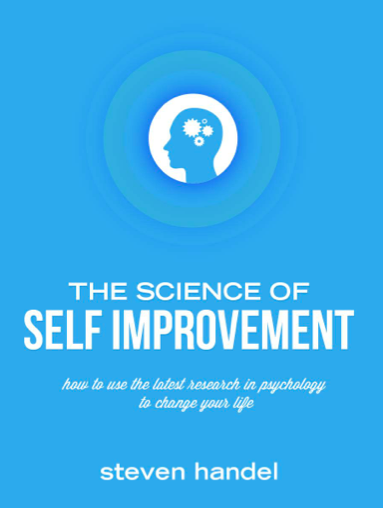
The Science of Self Improvement is a comprehensive digital guide on how anyone can achieve a happier and more fulfilling life.
It is based on 7 years of psychology research and self-experimentation, covering key areas in self improvement, especially beliefs, emotions, habits, relationships, work, and health.
Throughout the guide you will find useful information based on key studies in psychology and neuroscience.
There’s also a myriad of practical advice and techniques that you can begin applying today to start seeing significant changes in your happiness, success, and well-being.
This e-book is unlike most other literature in self improvement, because it is scientifically supported and evidence-based.
It also integrates many recognized fields of psychology – including cognitive psychology, behavioral psychology, positive psychology, and meditation – and puts them all into a complete guide that has everything you’ll need to know about self improvement.
Full package includes…
- The Science of Self Improvement (PDF + EPUB files)
- Meditation Guide: 8 Exercises for Improving Awareness in Your Everyday Life (PDF + EPUB files)
- Free Lifetime Updates – Whenever an updated or revised copy of The Science of Self Improvement is released, you will get a new copy absolutely free.
Price: $19.49
Now With 35% Off Discount!
Upon purchase you will receive an immediate download link for The Science of Self Improvement and Meditation Guide.
What Will I Learn?

Beliefs and Your Map of Reality
- How your beliefs reflect your view of the world and how you interact in it.
- The different factors that influence your beliefs (parents, teachers, friends, culture, etc.)
- Why your beliefs must be flexible and subject to change in the face of new evidence.
- How to challenge unhelpful and irrational beliefs by asking yourself thought-provoking questions.
- The importance of reflection in learning and education.
- How to minimize cognitive biases such as: confirmation bias, negativity bias, framing effect, and the dangers of black and white thinking.
- How to reframe your perspective about a situation and turn destructive beliefs into constructive beliefs.
Emotional Intelligence
- The evolutionary purpose of emotions, and how emotions affect our ability to survive and adapt to our environment.
- The different methods scientists use to study emotions.
- Learn what influences your emotions, such as thoughts, past experiences, your environment, and your biology.
- The neuroscience of emotions and self-regulation. How the “thinking” parts of your brain keep the “feeling” parts in check.
- How to change the way you process emotions through techniques like: cognitive therapy, meditation, exercise, music, entertainment and more.
- What is emotional intelligence? How can you become more aware of your emotions and learn from your emotions (even “negative emotions” like anger, fear, and sadness)?
- The importance of finding healthy ways to express emotions and giving yourself “permission to experience the full-range of human emotions.”

Changing Habits
- How to identify the structure of your habits. Every habit is a cycle of “cue-routine-reward.” Once you understand the cues and rewards, you can change your routines and habits.
- How to make a plan to change your habits using “implementational intentions,” such as “If situation X arises, I will perform response Y.” This is a simple but effective technique used in cognitive-behavioral therapy.
- How to maximize your will-power using scientifically proven techniques.
- The importance of social support and accountability when trying to change habits.
- How to measure and keep track of your progress when building new habits.
- The advantages and disadvantages of setting deadlines on certain goals.
- How to use inspirational quotes and images to keep you motivated when you need that extra boost.
- How to systematically overcome fear and anxiety when learning new habits.
- How to use visualization techniques to make habit change easier.

Work and Leisure
- How to find work that you enjoy and motivates you.
- Why you should focus on activities that bring out your interests and strengths, and why you shouldn’t just do a job or career because other people think you should.
- How to improve work satisfaction at your current job.
- How to build strong relationships with co-workers.
- How to minimize stress and boost productivity in the workplace.
- The importance of taking breaks and enjoying leisure time.
- How to discover what type of breaks work best for you and keep you energized throughout the day.

Positive Relationships
- Why the relationships we build is a crucial component of our happiness and well-being.
- How to become a more effective communicator and listener.
- Techniques for improving how you communicate, such as improving speech and body language.
- Learn the structure behind conversations and how to keep a conversation going with anyone.
- How to build positive relationships and avoid negative ones.
- Why you should view everyone as equals, and not judge people based on prejudices.
- How to focus on other people’s strengths and positive attributes.
- How to build strong connections with people by being yourself and enjoying time spent with others.
- How to forgive people and cultivate good intentions toward nearly anyone.

Physical and Mental Health
- How what you eat affects your brain, and key “brain foods” to keep in mind that will improve mental health and cognitive fitness.
- The importance of physical exercise in mental health, and how it improves mood, learning, self-control, and executive functioning.
- Why we should minimize alcohol, cigarettes, and drug abuse – and how abusing these substances has shown to diminish not only physical health, but many aspects of our mental health as well.
- Important tips on how to make small, practical, and steady changes to your diet and exercise.
- Why physical health is not something we should underestimate when trying to live a happier and more balanced life.
In addition to “The Science of Self Improvement” I’ve also included several bonuses that will be a great supplement to your personal growth and evolution.
Bonus #1
Meditation Guide: 8 Exercises to Improve Awareness

In addition to The Science of Self Improvement I’ve also put together a meditation guide that includes 8 exercises anyone can use to begin improving awareness in their everyday life. These exercises include:
| Breathing Meditation | Sound Meditation |
| Walking Meditation | Urge Surfing |
| Loving-Kindness Meditation | STOP Meditation |
| Open Mind Meditation | Eating Meditation |
Meditation has become a big topic in psychology today, which is why I wanted to dedicate a whole guide to it. I’ve personally practiced all of the meditations in this e-book and I have found benefits with each and every one of them. I find meditation to be a very important tool in our self discovery and self improvement.
Bonus #2
Free Lifetime Updates
Whenever I release an updated or revised copy of The Science of Self Improvement you will receive a new copy absolutely free. This is one huge benefit to buying e-books: if a hardcover book gets updated, then you need to go out to the book store to buy a new copy; but when an e-book gets updated, you can just download the new edition for no extra charge.
I plan to keep The Science of Self Improvement as updated and relevant as possible. If new research comes out that I believe is important, I will do my best to integrate that into the next e-book and send you a revised copy.
Act now and get everything instantly…
- The Science of Self Improvement (PDF + EPUB files)
- Meditation Guide: 8 Exercises for Improving Awareness in Your Everyday Life (PDF + EPUB files)
- Free Lifetime Updates – Whenever an updated or revised copy of The Science of Self Improvement is released, you will get a new copy absolutely free.
Price: $19.49
Now With 35% Off Discount!
Upon purchase you will receive an immediate download link for The Science of Self Improvement and Meditation Guide.
Sam Spurlin from SamSpurlin.com
“Steven Handel has published a gem of a book…all of these lessons are based scientific findings (some from studies of psychology others from the physiology – like brain scans). And Steven has boiled it all down to practical advice that you can implement.”
Evan Hadkins from Living Authentically
“I breezed through The Science of Self Improvement and found myself very much satisfied by the content. Emotional balance is properly explained, as well as how to maintain and improve relationships, and also the tips to manage your thinking are a huge plus. Very good book indeed.”
Nitish Singh