
Earlier this morning I was watching a lecture on positive psychology by former Harvard professor Tal Ben-Sahar.
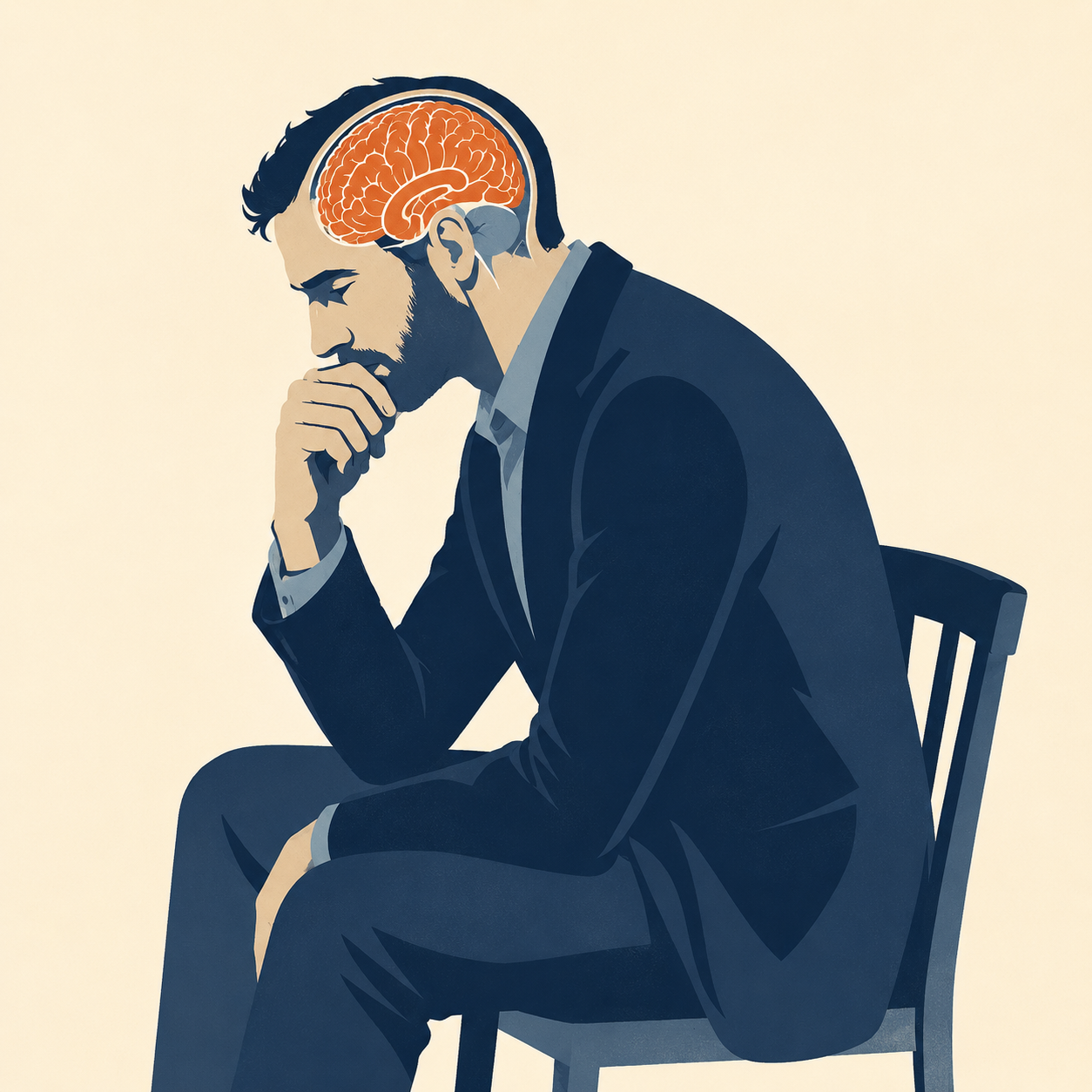
During each day of the class Sahar allocates two or so minutes of complete silence. This is all done in the name of embracing reflection and introspection, a practice that Sahar finds very important in improving both physical and mental health.
Within the lecture he cites a study done by MIT Professors David Foster and Matthew Wilson, one which Sahar found rather convincing regarding the importance of reflection in our everyday lives and specifically its effects on our cognitive abilities.
In this study researchers looked inside the brains of rats. They paid particular attention to the hippocampus, a brain structure that has shown to be responsible for learning and memory in rodents, primates, and humans. They performed brain scans on rats as they went through a maze, and then also after the experience, during times of reflection.
- “What the results suggest is that while there certainly is some record of your experience as it is occurring (in other words when the rats were running the maze), the actual learning – when you try to figure out: ‘What was important? What should I keep and throw away?’ – that happens after the fact, during periods of quiet wakeful introspection.”
Rats who were given a chance to relax and reflect showed better signs of learning than rats who were not given a chance to relax and reflect. Scientists have implied that it could be that “replaying a sequence of behavioral events in our mind” is an important mechanism in effective learning and memory retention.
Why daily reflection is so important
If we can reinforce learning by actively replaying memories then certainly there is good reason to practice wakeful introspection. Like Sahar, we should set aside a time and place for it. Even by reflecting on negative events, we can extract lessons from our old ways and thus learn to gain something positive from them. The implications of this study are more than just getting rats to run through mazes faster, it can also have a significant effect on building new habits and improving the quality of life.
On this site I often write about the importance of relaxation on our health and happiness. To know that these exercises can also improve our cognition and learning is just another good incentive to continue practicing these everyday.
Most of us have grown up in a culture surrounded by noise, clutter, and busy-ness. There is sometimes even a disdain for silence; we find it awkward, unproductive, or boring. But maybe we are just not very good at it? Perhaps this modern culture also explains how we have left society with so many children with ADHD and other learning disabilities.
Is it really so hard to find the time for a little peaceful reflection? Even just 5 or 10 minutes a day is enough to start seeing the difference. We could easily accomplish this during a lunch hour or after dinner. It is a good way to soak in everything that has happened to us throughout the day and at the same time relax all the tensions from family, relationships, and work. It gives us time to ask, “Am I staying on course? Am I doing the right things? Am I improving myself?” These are just some of the questions we can ask to better ourselves.
Reflection turns “information” into “transformation”
All knowledge is processed knowledge. We don’t know things in the form of their raw sensory experience, but the form in which we conceptualize them. We then integrate these concepts into our representation of the world, just like the rat does when it makes a mental map of a maze.
As Sahar describes in his lecture, “information” is the sensory data of what we experience and “transformation” is the map of reality we create from that data. When we reflect we are re-initiating this process of transformation by deriving new meaning from our memories.
During transformation we decide what parts of the experience were most important and worth paying attention to. When our mental schema doesn’t work, we can always reflect back, re-focus, and adjust our understanding of that experience. Although this may seem like commonsense, very few people actively practice this technique.
Sahar believes that the road to improvement isn’t necessarily about getting more and more information, but transforming our understanding of the information we already have. This requires us to look inside at what we already know and to use that knowledge in a more effective manner. The educational tools and resources are all already there inside of us.