Put Your “Game Face” On To Start the Day: The Power of a Competitive Expression

game face


Can putting on your “game face” actually motivate you, inspire you, and boost your confidence and grit?

According to a new study published in the scientific journal Stress and Health, there may be a real benefit to putting on a “game face.” In one experiment, they had two groups of participants try to complete a 100 piece black-and-white mandala puzzle. The group that was asked to display a “game face” performed over 20% better on the task, and showed better stress recovery compared to the control group.

These findings are consistent with the facial feedback hypothesis, which suggests that by changing our facial expressions we can also change our mental state. One of the most common studies on this is the idea that smiling can help boost positive emotions.

What is a “game face” exactly? According to psychologist Matthew Richesin, they are facial expressions that are “commonly associated with effort, pain, and competition.” One may even call many of these expressions aggressive.

One of the most famous examples of this is Michael Phelps’ “game face” at the 2016 Rio Olympics before his competition in the men’s 200-meter butterfly final.


Here is the unforgettable “#PhelpsFace”…

game face

As you can see, Michael Phelps’ “game face” is quite menacing and gritty. But you can tell that he is locked in, focused, and has his eyes on the prize. Perhaps it played some small role in helping him win the gold medal?

Continue reading

The Information Pyramid: Being More Mindful of the Types of Information We Consume

information pyramid

Listen to this article through Instaread here:


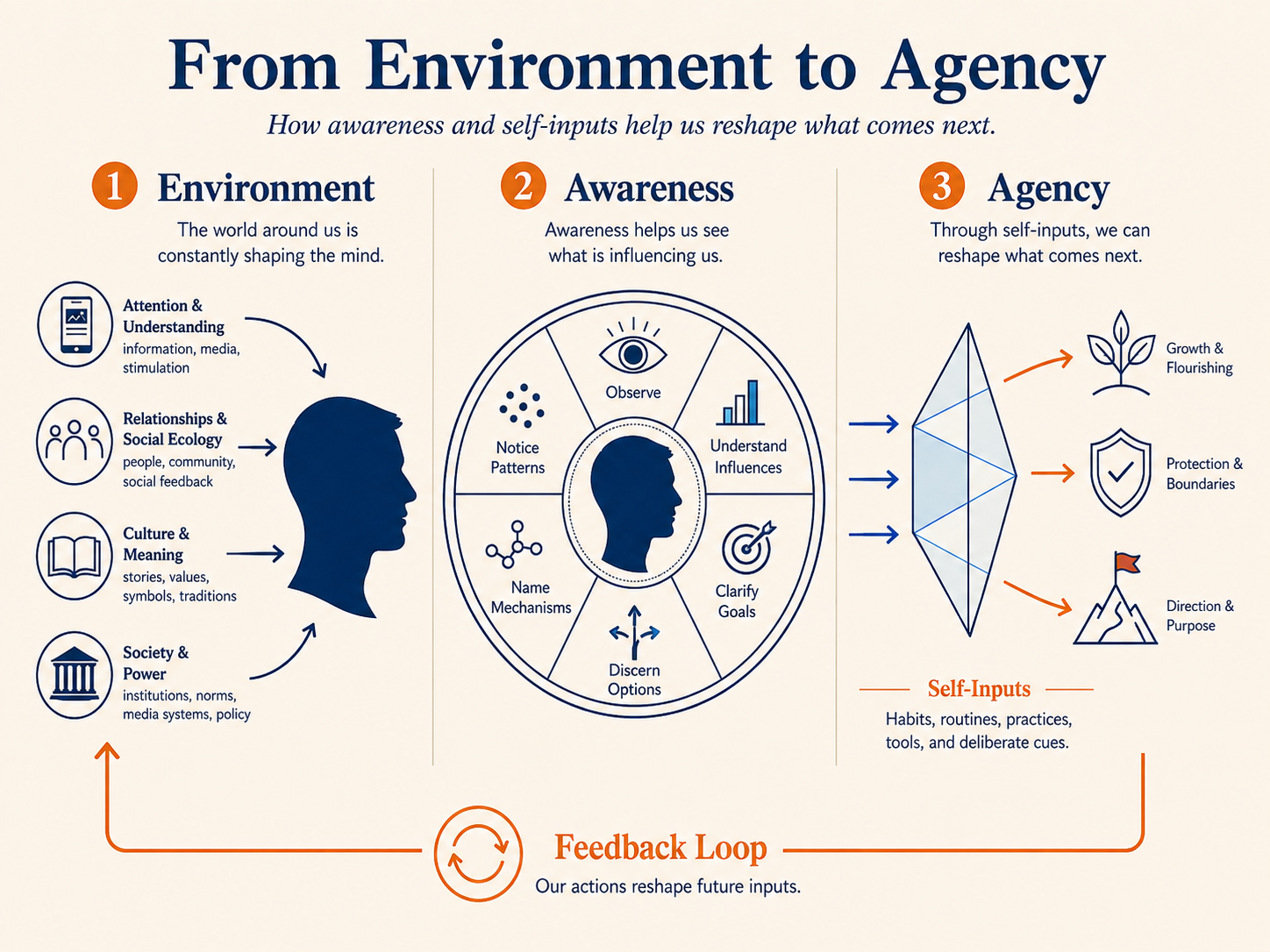
If you consume a lot of junk food, your body is going to feel like crap and not function at its best. And if you consume a lot of junk information, your mind is going to feel like crap and not function at its best.

In other words… we have to be just as mindful of what we consume with our minds as we are of what we consume with our bodies.

The information that you consume on a daily basis (whether through TV, books, movies, articles, etc.) can have a huge impact on your psychology. It not only affects your daily thoughts, emotions, and mood, but it also shapes your overall perspective on the world, including your core beliefs and “map of reality.”

Are you feeding yourself a steady diet of healthy information? Do you know where your information comes from? Do you know how reliable it is? Do you know how it’s affecting you on a daily basis?

These are all things questions we should be mindful of, especially in today’s world where there is so much information and misinformation that distracts us and overwhelms us.

It can often be very difficult to cut through the noise and determine what information we should focus on vs. what information we should ignore. But we all need some type of “information filter” or we’d drive ourselves insane trying to keep up with everything.

In the same way that a “food pyramid” is a guideline for what types of food we should eat to maintain a healthy and balanced diet, I decided to create an “information pyramid” as a guideline for what types of information we should consume to maintain a healthy and balanced information diet.

It’s not meant to be followed too rigorously, and it’s more of a rough guideline for what would typically be considered “high educational value” vs. “low educational value.”

My “information pyramid” is more focused on information that boosts learning, knowledge, and/or cultural value, and not information that’s simply used for boosting your mood and attitude (such as watching a funny TV show or listening to your favorite song, which also have a positive benefit on our lives).

So with that in mind, I present my “information pyramid” and my thoughts behind it.

Continue reading

The Over-Promising Trap: Beware of People Who Promise You the World

Listen to this article through Instaread here:


A friend recently asked me, “What’s a red flag that most people wrongly interpret as a positive thing?” It was a great question and an answer immediately came to mind: those who promise too much.

I see people fall for the “over-promising trap” very often. They meet someone who is super nice to them, treats them well, and promises the world to them. Then they inevitably get burned and blind-sided…

They think, “I never saw this coming! He was so nice to me!” But once you see this pattern of behavior enough, it becomes very easy to recognize early on.

Of course, it feels good to have nice things promised to you. It makes you feel incredibly happy about the future. That’s why the trap is so alluring – and that’s why many people interpret this behavior as a “positive” thing.

In general, people who promise too much (and those who fall for it) often engage in magical thinking, where they set idealistic standards about what a “healthy relationship” should look like. Often they are trying to re-create romanticized versions of “love” that they find in movies, books, and TV shows.

Becoming rich. Traveling the world. Owning a yacht. Going to nice restaurants and fancy parties every night. Having kids. Going to the gym together every morning. Never fighting or arguing. Always being “love-y dove-y.”

These are just some of the things people may dream up when they picture the “perfect relationship,” but they aren’t an accurate view of how most relationships unfold in the real world.


Potential Warning Signs of “Over-Promising”

  • The person likes to say they “promise” a lot, even when it comes to really small and trivial things.
  • The person makes promises that are big and unrealistic which would be difficult, if not impossible, to fulfill in the future.
  • The person moves “too fast” in the relationship, talking about the future (love, marriage, kids, retirement) very early on.
  • The person already has a history of breaking “promises” in the past, especially in past relationships.
  • The person is undeservedly confident in themselves and their ability to control the future (perhaps a bit narcissistic).
  • The person uses a lot of absolutist language like “forever,” “always,” and “never.”

The most important thing is to be aware of promises you know can’t realistically be kept in the future. Especially when it feels like a person is just saying things that sound nice, but there’s no weight behind the words.

Continue reading

Playing Devil’s Advocate With Negative Beliefs: The Power of Proving Yourself Wrong

devil's advocate

Listen to this article through Instaread here:


One important attitude behind self-growth in any area of life is: always be open to the possibility that you are wrong about something. Because only by admitting you’re wrong can you truly learn, grow, and change yourself.

My favorite way to prove myself wrong is to play “devil’s advocate” toward my current beliefs. I assume the opposite of what I believe is true, and I begin to search for facts and evidence that support this opposing view.

Often when I do this, I discover that my current beliefs aren’t as “black” and “white” as I thought they were, but instead that the truth is often much more complicated.

This “devil’s advocate” attitude can be especially useful when you apply it to negative beliefs about yourself. People with low self-esteem tend to be irrationally negative in how they judge themselves. They often ignore certain truths that don’t fit their conceived “story” or “narrative” about themselves.

This is because when you hold any negative belief about yourself, it’s easier to find examples where it hold trues.

So if you believe something like “I’m socially awkward” or “I’m not good around people,” you’re going to distinctly remember ALL of the times you made a fool of yourself around others (that first day of school, that family reunion, that one date, etc.)

Our first instinct behind any deeply held belief is to search for evidence that proves us right. That is why actively playing “devil’s advocate” is so important for undermining our biases and false perceptions.

For example, if you believe you are “stupid,” or “mean,” or “weak,” you probably don’t often think about the times when you actually did exhibit “intelligence,” or “kindness,” or “confidence.”

Of course, that doesn’t mean that you don’t need to improve on those traits. But it’s important to remember that you’re not completely void of those traits either.

Often recognizing the “tiny evidence” that you can be intelligent, kind, or confident (at times), opens up the possibility in your mind that it’s a trait that can be honed and improved upon.

And that can be a very important first step toward serious self-improvement and self-growth.

Continue reading

7 Ingredients of a Positive Childhood: Early Experiences That Influence Mental Health

positive childhood


Psychology research is clear that our childhood and early experiences can have a massive influence on our happiness and well-being later in life.

While most of this research has focused on how negative experiences can impact our mental health into adulthood (such as poverty, abuse, or neglect), a new study published in the scientific journal JAMA Pediatrics looked into how early positive experiences can influence mental health in a good way.

First, this article will review the key findings behind Adverse Childhood Experiences (ACE), then we’ll go into what the researchers found out about Positive Childhood Experiences (PCE).

Keep in mind that learning how our childhood influences our mental health can be an important part of self-awareness and better understanding our current situation. I’ve written before about the importance of paying attention to family patterns.

However, we don’t need to think of these patterns as set in stone – or that we are predestined to have terrible lives if we have bad childhoods.

Your past can influence your future, but it doesn’t have to dictate it. There is always room for growth and improvement. And while you can’t change your past, you can change how you respond to it and what you choose to do with it going forward.

That’s an important reminder I wanted to share before we get into the rest of the article…

Continue reading