
Family roots are more than genealogy. An old photograph or familiar family story can change how we see our own lives. Connecting with those roots helps us understand where we belong and what we want to carry forward.
Family roots can be underappreciated in a society that overemphasizes individualism and independence.
We are encouraged to think of ourselves as self-made, free to construct an identity from scratch. Yet every life begins within a history already in motion. Family shapes us long before we consciously decide who we want to become. We inherit traditions and stories that began before we were born.
As a good American, I learned to associate success and freedom with breaking away from family, religion, and community — including leaving your hometown and defining yourself on your own terms. Learning to care more about family, ancestry, and history has been an ongoing paradigm shift in my thinking.
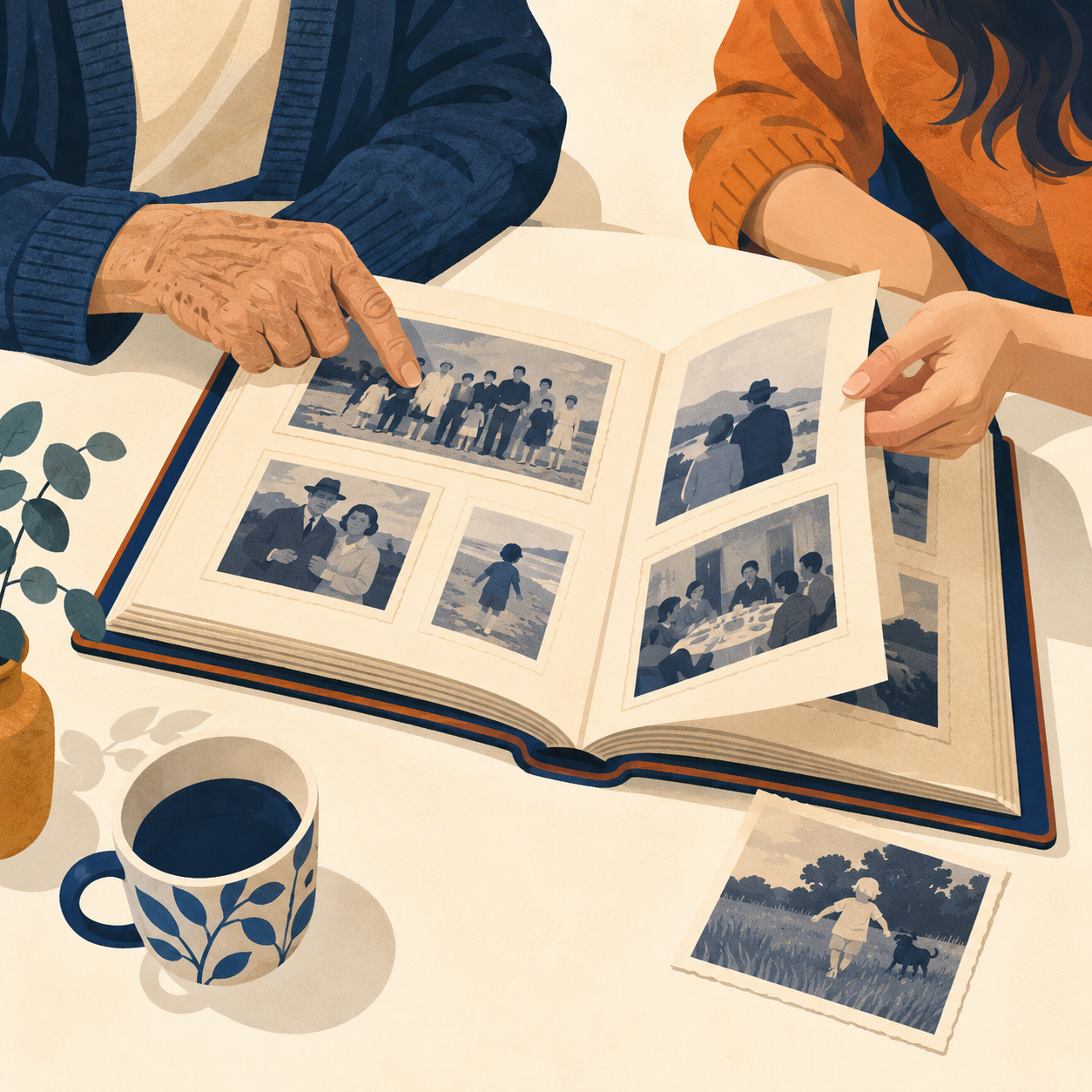
Recently I’ve been spending more time with my grandma. She has dementia, so we’ve been doing simple things together like looking through old photographs and listening to classical music.
Photo albums are one of the simplest ways to keep family connections alive across generations. My grandma lost both of her brothers early in her life. One of them died while serving as a pilot in the Pacific during World War II. I never got to meet them, but old photographs give me a glimpse of who they were and reveal parts of my grandma’s life that existed before me. They help me understand more about her and where I come from.
These family roots are deep inputs that can influence us even when we are unaware of them. They reach us in several ways that often intertwine:
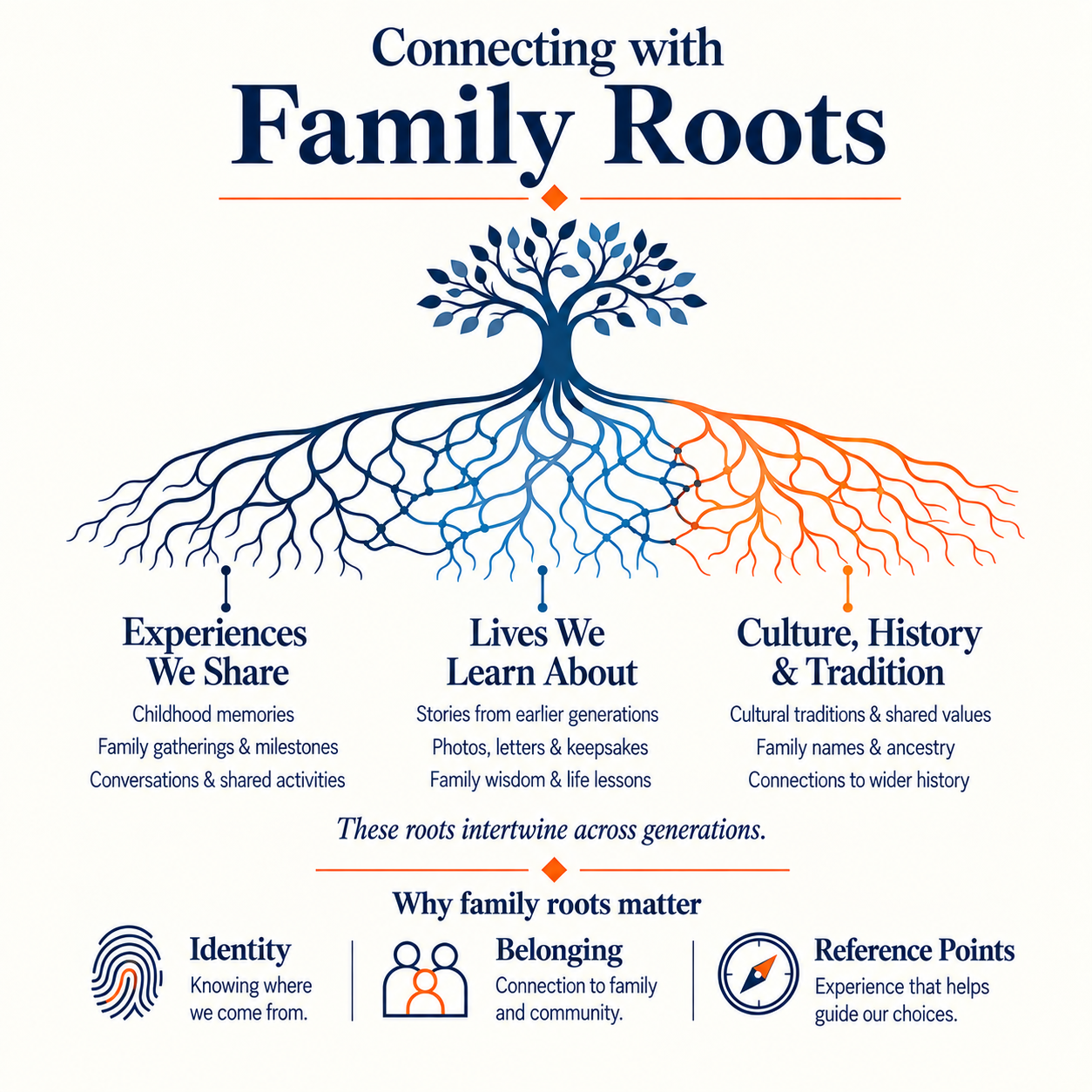
Experiences We Share
Family roots start with everyday experiences and the memories we build over time.
The classic family dinner at the end of the day is one example. Everyone gathers, eats, and catches up on each other’s lives. For many families, this is the only time everyone is together. Rituals like these help strengthen family ties and build a shared sense of belonging.
Other core family memories follow us through life, such as summer vacations, holidays with relatives, birthdays, and graduations. One memory that will always stick with me is going on a family road trip in a rented car and being able to see the Grand Canyon, Bryce Canyon, and Yosemite National Park. Shared moments like these can define chapters in our lives and become part of our larger story.
Belonging often starts with the experiences we share within our family, community, or tribe, and that connection can then extend to a more distant lineage.
Lives We Learn About
Family roots also connect us with lives and experiences we’ve never witnessed ourselves.
Sitting down with an old family photo album gives us a peek into how earlier generations lived, how they dressed, how they spent their time, and what they did for fun. Older relatives can tell us the stories behind these photographs and share their own memories of family members we never had the chance to meet. In this way, the lived experiences of older relatives become part of a family’s oral history that gets passed down.
Other family artifacts, like letters, newspaper clippings, home videos, diaries, or keepsakes, can connect us to a particular time and place. An heirloom like a ring, handmade quilt, military medal, or old instrument can become a symbol of family continuity as it passes from one generation to the next. Knowing whose it was can make that connection feel more personal and meaningful.
These memories aren’t just for reminiscing. Old family stories can open up deeper conversations about ourselves. In a 2026 study, researchers found that wartime stories passed down within families can become powerful reference points that help guide our choices in the present. In related work by the same researchers, one mother described a meaningful conversation with her son that began with their family history:
-
“Yesterday, my son and I took the time to discuss our family history. First of all, I was able to tell him what I know about my mother’s and grandfather’s history. Then, for several hours, beyond the questions he was asking, we shared our thoughts on the values that drive us, on life’s paths, mine, his, the family’s, what guides our choices, how to build ourselves as men and women, what makes us who we are, who are the ones who play a decisive role in our lives and why… It was a very rich encounter!”
Culture, History, and Tradition
The family is one of the first places where personal life intersects with wider culture, history, and tradition.
Religion and politics often first reach us through family life. Religious beliefs can take shape through the holidays we celebrate as children or going to church every Sunday. We also pick up political beliefs from family conversations about elections or the way our relatives tend to vote. And a family history of military service or political office can shape our ideas about what role we play in our country.
Ethnic heritage can also be an important part of family life. A family name or the language spoken at home can keep us connected to an ancestral homeland. Traditional recipes, dances, and clothing can keep that heritage alive in modern family life, even generations after a family has migrated.
Putting together a simple family tree can make those connections more concrete, showing where earlier generations lived and which parts of their stories you could dive into further. Ancestry websites can help you find historical records and fill in the details.
Family roots can also give us a personal connection to larger historical events. Learning that an ancestor sailed on the Mayflower or that a relative lived through the Great Depression can make those chapters of history feel closer, as part of our family’s story as well as the nation’s.
Why Family Roots Matter
- Identity: Family roots help us understand where we come from. They give us a longer view of ourselves — who and what shaped us over time — and help us recognize traits, values, sensitivities, or interests that may run through our family.
- Belonging: Shared memories and traditions situate us within a family and a wider community. They give us something meaningful in common and connect us across generations.
- Reference Points: Family roots can provide examples, warnings, possibilities, and practical wisdom that help guide our present choices. They can also inspire and motivate us.
Roots tell us what past we belong to. Reference points help us decide what to do with it.
Passing the Torch
Recognizing the past also turns us toward the future: What will we pass down that lives on after we pass away?
Some family stories survive only because someone within the family remembers and cares enough to share them. Textbooks and documentaries can teach us about the past, but they cannot preserve every family’s story and experience.
Long before the printing press, people passed down stories, lessons, and myths by word of mouth. A conversation over an old photo album is part of this same tradition.
What family stories will you pass along? What new ones will you create for others to tell?