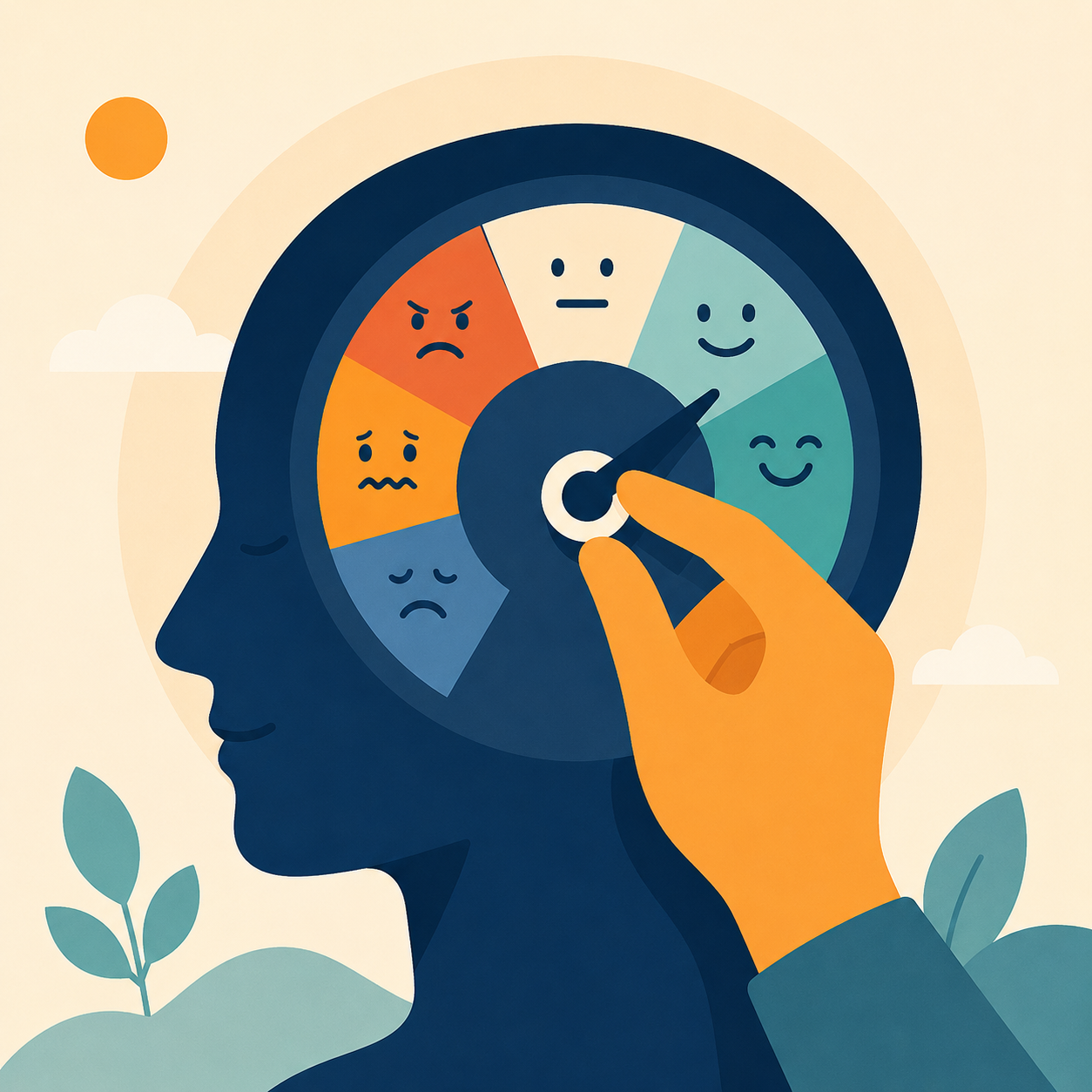
Explore how you recognize emotions in yourself and others, work through difficult feelings, and choose how to respond. Please wait... 1. I often do things that feel good in the moment but leave me feeling worse afterward.Strongly AgreeAgreeNeutralDisagreeStrongly Disagree 2. I can work through difficult emotions without getting stuck in them or pretending they aren't there.Strongly AgreeAgreeNeutralDisagreeStrongly Disagree 3. I know how to cultivate positive emotions through my habits, activities, and surroundings.Strongly AgreeAgreeNeutralDisagreeStrongly Disagree 4. I know when to trust a gut feeling and when to slow down and question it.Strongly AgreeAgreeNeutralDisagreeStrongly Disagree 5. I often weaken an apology by defending or justifying what I did.Strongly AgreeAgreeNeutralDisagreeStrongly Disagree 6. I frequently become angry, upset, or frustrated with other people.Strongly AgreeAgreeNeutralDisagreeStrongly Disagree 7. I treat emotions as useful information, but not automatic instructions.Strongly AgreeAgreeNeutralDisagreeStrongly Disagree 8. I often take other people's moods personally, even when the cause may have little to do with me.Strongly AgreeAgreeNeutralDisagreeStrongly Disagree 9. I often struggle to identify what triggered a strong emotion.Strongly AgreeAgreeNeutralDisagreeStrongly Disagree 10. I can understand why someone feels the way they do, even when I would react differently.Strongly AgreeAgreeNeutralDisagreeStrongly Disagree 11. When emotions run high, I sometimes act in ways I later regret.Strongly AgreeAgreeNeutralDisagreeStrongly Disagree 12. I can often tell how someone is feeling from their tone, facial expression, or body language.Strongly AgreeAgreeNeutralDisagreeStrongly Disagree 13. My moods and emotions are often unpredictable, even to me.Strongly AgreeAgreeNeutralDisagreeStrongly Disagree 14. I sometimes react to people before trying to understand where they are coming from.Strongly AgreeAgreeNeutralDisagreeStrongly Disagree 15. I avoid talking about my feelings, even with people I trust.Strongly AgreeAgreeNeutralDisagreeStrongly Disagree 16. I struggle to put my feelings into words when talking with other people.Strongly AgreeAgreeNeutralDisagreeStrongly Disagree 17. I can notice what I'm feeling while the emotion is happening.Strongly AgreeAgreeNeutralDisagreeStrongly Disagree 18. When a difficult emotion hits, I can usually choose my response instead of letting the emotion decide for me.Strongly AgreeAgreeNeutralDisagreeStrongly Disagree 19. I can feel a strong emotion without acting on the first impulse it creates.Strongly AgreeAgreeNeutralDisagreeStrongly Disagree 20. Every emotion can serve a function or purpose in life.Strongly AgreeAgreeNeutralDisagreeStrongly Disagree 21. I bottle up my emotions until they come out more strongly than I intended.Strongly AgreeAgreeNeutralDisagreeStrongly Disagree 22. I recognize how my environment, stress level, sleep, and physical state influence my emotions.Strongly AgreeAgreeNeutralDisagreeStrongly Disagree 23. When someone is upset, I often jump to advice before fully hearing them out.Strongly AgreeAgreeNeutralDisagreeStrongly Disagree 24. I know how to channel strong emotions into something constructive, such as writing, music, exercise, prayer, or creative work.Strongly AgreeAgreeNeutralDisagreeStrongly Disagree 25. I often focus on what is within my control.Strongly AgreeAgreeNeutralDisagreeStrongly Disagree Loading...