
Make unwanted habits harder to start and easier to interrupt by recognizing triggers and building boundaries.
Willpower can help us resist an unwanted habit, but repeatedly resisting the same temptation takes attention and energy.
If our surroundings keep prompting us to do something we’re trying to change, we find ourselves in a constant battle with that urge. Sometimes it’s better to find ways to avoid the battle entirely.
One place to start is identifying the triggers that set an unwanted habit in motion. Habits often follow a structure of cue → routine → reward. By paying attention to the cues that prompt a routine, we can create boundaries that help prevent the urge from being triggered in the first place. For example, a phone notification can become a cue to stop working and check your messages. Turning off unnecessary alerts reduces how often that loop gets started. Even when an urge does arise without an obvious cue, boundaries can still make it harder to carry out your usual routine.
A boundary might mean keeping something out of sight, changing where you spend time, or adding an extra step before you can act on an urge. Deciding what to change in your environment beforehand can reduce how often you need to rely on willpower in the moment.
Identify Your Triggers
We often notice an unwanted habit only after we’re already doing it. You might catch yourself scrolling through your phone for twenty minutes without knowing what prompted you to open the app in the first place.
Start with the routine and work backwards. What was happening just before the habit began? What cues from your environment set it off? What thoughts or emotions may have triggered a response? Over time, you begin to notice the same situations, feelings, or objects repeatedly reinforcing the same patterns.
Types of Triggers Include:
- Location – Where are you when the habit begins? (“sitting on the couch,” “at your desk,” “at a bar”)
- Time – When does the habit tend to happen? (“late at night,” “first thing in the morning,” “during your afternoon break”)
- Mood – What are you feeling before the habit begins? (“bored,” “anxious,” “lonely,” “excited”)
- Physical state – What’s happening in your body before the habit begins? (“hungry,” “tired,” “restless”)
- Thoughts – What thoughts bring the habit to mind? (“I need a break,” “I wonder if anyone replied,” “I deserve a treat”)
- People – Who are you with when the habit begins? (“friends who smoke,” “coworkers who gossip,” “by yourself”)
- Objects – What do you see, hear, or have within reach that prompts the habit? (“snacks on the counter,” “a phone notification,” “the TV remote beside you”)
- Immediately preceding action – What do you do right BEFORE the habit starts? (“finish a meal,” “get home from work,” “climb into bed”)
Some triggers are easier to build boundaries around than others. You can put an object out of sight or choose a different place to meet friends. Internal triggers, such as boredom or stress, can be harder to avoid entirely. Even when you can’t remove a trigger, you can often change how easy it is to carry out the usual routine.
Creating Boundaries Between You and Your Unwanted Routines
Start with one unwanted habit and ask yourself, “What can I change beforehand to make this less likely to happen?”
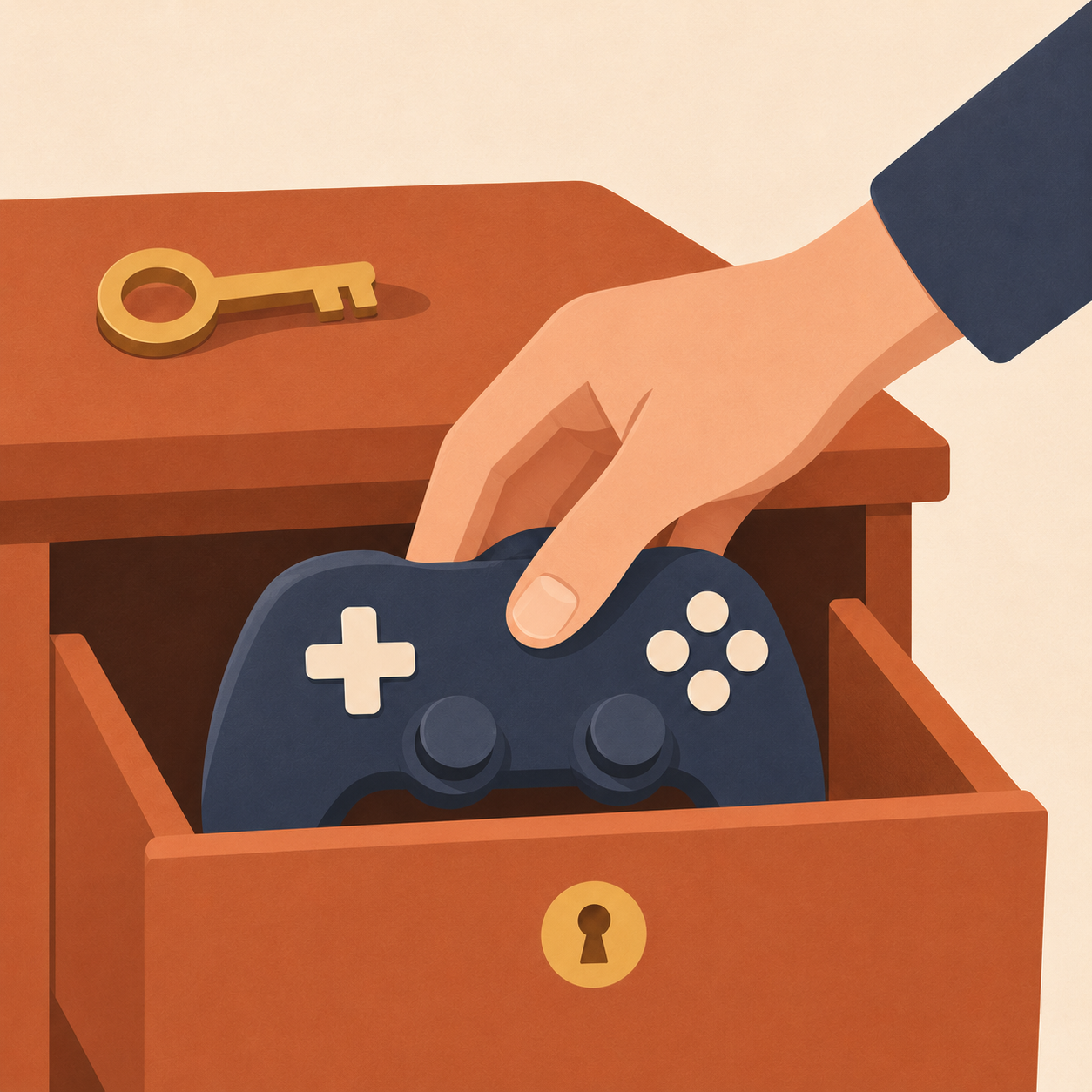
If you regularly sit down to play video games immediately after work, try putting the controller away in a drawer after each session. The next time you get home, you’ll have to take it out again before you can start playing. It’s a small inconvenience, but it interrupts the flow of a familiar and automatic sequence.
Adding an extra step can discourage you from following through or give you a moment to reconsider. This is one way a boundary can serve as a mindful nudge, reminding you to ask, “Do I really want to do this right now?”
If one small boundary isn’t enough, you can always strengthen it. For example, adding a lock to the drawer means you now have to get the key and unlock it before taking out the controller. That extra step makes it that much harder to follow through on a habit you already know you want to change.
Look back at the list of triggers. Different triggers call for different boundaries.
If meeting friends at a bar usually leads you to drink more than you intended, suggest meeting more often for breakfast or an afternoon walk instead. Changing the setting reduces your exposure to stimuli that may trigger drinking, like loud music, dancing, and the availability of alcohol. You’re creating a boundary around the situation before you find yourself already inside it.
You may need to set even firmer boundaries with certain habits. That could mean blocking an ex you keep reaching out to, cutting ties with friends who repeatedly pressure you into unwanted habits, or blocking access to websites that can become a vortex for your time and energy.
Boundaries can make habit change easier, but don’t expect a cakewalk. At first, you may feel frustrated when the usual option is harder to reach or no longer available. The urge can still be there, even after you’ve changed your surroundings. This is where urge surfing can help too: noticing the craving and giving it time to rise and fall without acting on it.
Boundary-building is part of a broader ecological approach to habit change: paying attention to how our surroundings influence us and how we can reshape them in return. By adjusting our exposure to recurring triggers and making unwanted routines less convenient, we change the conditions in which our everyday choices take place.