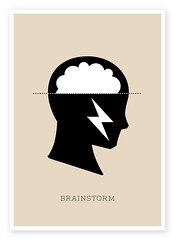
MINDFULNESS AND CREATIVITY
Thoughts are a lot like bugs…
- Some fly right by us and we don’t notice. Others buzz in our ears and won’t stop. Some come with stingers. And some can be a pleasure to behold.
Quick! Grab a net before it gets away…
A lot of creative problem-solving is about being in the right place, at the right time, with the right mindset. And because we never know exactly when or where this is – maybe on the bus, in the shower, or while talking to a friend – it is important to be alert of potentially good ideas at all times.
Creative people collect thoughts like a bug collector, that means always having your net around and an empty jar. When something crosses your path, catch it and contain it, write it down somewhere or leave yourself a voice memo.
Have a place to store these ideas long-term: a notebook, a blog, or a digital folder.
Some ideas you might want to put into action right away while others you may never put into action. It doesn’t matter, good ideas are worth holding onto because you can always build upon them later, suggest them to others, or use them to stimulate your mind when it goes blank.
Whatever you do, don’t fall into the trap of thinking you’ll remember an idea when you get home, or when you wake up, or when you finally need it – you won’t. Like a bug, thoughts are always fleeting; they can be in your awareness one moment and then out the next. Get them while they are right in front of you or they might be lost forever!
“But, but…I’m never creative.”
- Bullshit.
Everyone has the capacity to be creative. Insights occur spontaneously all of the time, the problem is that they are often hidden underneath the everyday noise humming in our brains. Instead of using our minds to create and discover meaning, we get caught up in the smaller things: worrying about what to make for dinner or what grade we got on our latest exam. Lame!
Everyday we have tens of thousands of thoughts between hundreds of billions of neurons firing. That is a lot of competition going on in our heads and it is impossible to pay attention to it all at once. Neuroscientist Mark Beeman says that while an everyday thought, like what to eat for lunch, may take millions of neurons, an insight is usually made up of far less connections: a few tens of thousands. Therefore, Beeman claims that “…variables that improve the ability to detect weak associations may improve insight solving.”
One of the big variables might be better mindfulness. By becoming more attuned to our surroundings, and how we are reacting to them, we can more easily discover connections in our world, and therefore find meaningful solutions. This is just my hunch, but I like to think of mindfulness as the “net” we use when trying to catch those elusive ideas. In other words, by practicing better mindfulness we can be more aware of what would otherwise be unconscious to us – the “weak association” that tend to get outperformed by the “stronger associations.”
Another way to improve your insight ability is to just write down any ideas you come up with, even if they aren’t very good. My reasoning behind this is that it gets you in the groove of idea-making and thinking more creatively in general, which will push you to have more ideas in the future. As the ideas pile up, better insights will become more likely. A lot of this is a game of probability, and the more you practice the better your chances become.
Brainstorming. The ability to be creative and solve problems.
I don’t care what your interests are, we all brainstorm in certain situations. We might be mulling over a mathematical proof, or planning a sneak attack in Call of Duty 4, or thinking of something to say to the girl who works at Starbucks – but all that counts, to me, as a form of brainstorming.

We are most likely to brainstorm when we have a clear goal in mind. That’s the point. We want to get from Point A to Point B, but we don’t know how, so we have to first think about it for a little bit. Within this thought process we may reflect on past events, imagine future ones, or argue with other voices in our head telling us, “Are you sure this is going to work?” or “You’re crazy!”
Whether we brainstorm in groups or in solitude, brainstorming is a constant battle of ideas. Neuroscientist Mark Beeman claims that, while an everyday thought like what to eat for lunch may involve millions of neurons, an insight might only be tens of thousands. It might be that we are having creative thoughts all of the time, but they aren’t being listened to because they are largely happening underneath the surface, competing for our awareness.
When you enter other minds into the picture, like during a business meeting, the brainstorming process becomes even more dynamic. Not only do we have different neurons competing in an individual mind, but we also now have full ideas being verbalized, grabbing more of our attention, and synthesizing with other ideas.
The creative process can be chaotic, especially if we don’t have a methodological way of sifting through new thoughts and ideas, or letting other voices be heard. Setting some guidelines can be a good first start.
Tips for brainstorming in a business or organizational setting
- Start off with 3-5 minutes of quiet writing time so each member can first brainstorm individually.
- Have each member write down their ideas anonymously in order to limit social pressures that might hinder creative thought.
- After, collect all the ideas in a hat, pull one, and spend some time discussing it as a group.
- Encourage politeness and open-mindedness throughout the whole session.
- Allow members to write down new ideas during discussion.
- For extended meetings, make sure to include snacks and bathroom breaks. People that don’t have their physical needs met won’t be able to think as efficiently.
- Don’t ignore the environment of the meeting. Choose something with vibrant and lively colors, but nothing too distracting.
Remember that you are trying to build a system where creative chaos can flourish, but also later be processed into something practical and useful. This requires a constant shifting of perspectives, both as a dreamer, and also as a critic and a realist. Once you begin scrutinizing these ideas, you can begin connecting, and as your visions begin to synthesize you might be getting closer and closer to that Eureka moment.
Most creative processes follow a similar pattern, but the form and context they take place in can be very different, so we don’t often think of them as comparable. This time instead of business I’m going to list some guidelines for a music band (notice the similarities and differences):
Tips for brainstorming in a music band
- First ask each musician to warm up, go over scales, stretch, etc…
- Musicians think with their instruments, so after warming up the best way to brainstorm is through jamming.
- Give each musician a chance to start an idea, a riff, or a pattern, and then have the other musicians build around it.
- Read each other’s emotions and attitudes. Ask, “What is trying to be communicated?”
- Play off others and build an energy around the sound.
- Speak out when you hear something you like.
- Give helpful critiques when you hear something that can be improved.
In both scenarios you want to let everyone’s individuality be expressed, and then you want to try and integrate that into a more cohesive whole. That is what it means when people have creative chemistry.
Where Good Ideas Come From
Science author Steven Johnson spoke at a TED conference earlier this year about “Where Good Ideas Come From.” His theories come from an “environmental perspective,” meaning that good ideas rarely come from a single mind, but instead are likely to formulate when minds come together and exchange ideas in the right setting.
Most ideas, Johnson claims, take a long time to evolve. They remain dormant until our hunches combine with other hunches, and finally a full idea emerges. He says that the great driver of technology and science is our connectivity, and inventions like cellphones and the internet have become the primary engine of innovation.
Watch a great cartoon presentation of his lecture here:
His new book, “Where Good Ideas Come From” is coming out October 5th of this year! You can pre-order it here (or buy it depending on when you a reading this).
Individual minds and creative pairs
According to a recent article at Slate.com, there seems to be a debate among creative experts between what is more likely: the lone genius, or creative fusion when we work in pairs or in groups.
In a way this is a false dichotomy. Only individuals think, but their thoughts are very much influenced by their surroundings and interactions with others. If we were to take a newborn baby, put it in an isolated bubble and let it develop into an adult, it would have very few inputs to use toward creativity.
Rich minds always stay active and search for new experiences. They look at nature, visit New York City, talk to other like-minded individuals, and they also spend time alone, absorbing and reflecting on everything they have learned.
As an individual thinker, there are certain tips we can follow to enhance our creative output while interacting with our environment:
-
- Carry a notepad or voice recorder with you everywhere you go.
- Be interested and curious in everything.
- Always seek new knowledge.
- Talk to other creative people.
- Try and look at things in unconventional ways.
- Be more mindful of your thoughts.
Besides the advice to carry a notepad or voice recorder, a lot of this is about fostering the right attitude. Brainstorming and creativity is very much about how you see the world, and consequently how you interact with it.
Other great links on the creative process
Creativity is something that has always interested me. Not so surprisingly, there are many different ways to think about it. Here are a few links I’ve discovered over the past couple of months that give some interesting insights:

Recently I watched both of Jon Kabat-Zinn’s lectures at Google. For those who don’t know Kabat-Zinn is Professor of Medicine Emeritus at the University of Massachusetts Medical School. He is most known for his work with mindfulness meditation and stress reduction.
Watching his lectures really got me aching to get back into my mindfulness practice. The first one, “Mindfulness: Stress Reduction and Healing,” is a neuroscientific overview of the benefits of mindfulness meditation and how it is applied to modern medicine. The second one, “Mindfulness with Jon Kabat-Zinn” is more of a workshop, which goes over the guidelines of putting mindfulness to practice, and how to overcome potential obstacles.
If you have absolutely no clue what mindfulness is, then the second link is a fantastic starting point. I also usually recommend the book Mindfulness in Plain English by Ven. Henepola Gunaratana (the link is the full PDF, ~100 pages).
The concept of mindfulness however is actually pretty straightforward: non-judgmental awareness. To get a taste, try this: get out a piece of paper and a pen, and then write down all the sounds you can hear within a 5 minute span.
It is an incredibly simple exercise, but it helps cultivate skillful listening, and it makes you aware of things in your auditory world that you are otherwise unconscious of. Here is an example of a short two-session practice I did the other day. The first is in the afternoon, the second is later that night:
SEPT 23 – SOUNDS – 2:00PM – 2:05PM – Outside – Backyard – Sunny Day
-
Planes
Wind in trees
Wind pushing against fence
Birds chirping
Cricket chirping (faint)
Construction work
Wind chimes
Cars driving (in distance)
Fly buzzing
Motorcycle (going fast)
Helicopter
Water hose
Dog barking
SEPT 23 – SOUNDS – 9:30PM – 9:35PM – Outside – Backyard – Clear Night
-
Planes
Pond waterfall (loud)
Crickets (lots!)
Eminem song playing
Someone cough
Gate rattling
Door open
Cars driving
Motorcycle
I was (wrongfully) expecting the night session to be more tranquil, but it turned out it wasn’t. A neighbor was playing Eminem and I couldn’t make out any of the more subtle sounds in my environment.
But it is what it is – meditation is all about non-judgment – so I meditated on the Eminem song as if it were anything else.
People tend to think that in order to meditate you need to go somewhere really quiet – away from technology, cars, etc. – but that couldn’t be further from the truth. These technologies are a part of our world, an extension or our nature, and they are just as good as any other object of meditation (whether an “Aum” or a singing bowl).
We must meditate and accept what is, not idealize what is the perfect meditation. Both Jon Kabat-Zinn and Ven. Henepola Gunaratana as well as other mindfulness teachers emphasize the importance of applying mindfulness to all aspects of life.
If you want to stay updated with The Emotion Machine please join our newsletter.

1. The strange face-in-the-mirror illusion
- “An intriguing article has just been published in the journal Perception about a never-before-described visual illusion where your own reflection in the mirror seems to become distorted and shifts identity.
To trigger the illusion you need to stare at your own reflection in a dimly lit room. The author, Italian psychologist Giovanni Caputo, describes his set up which seems to reliably trigger the illusion: you need a room lit only by a dim lamp (he suggests a 25W bulb) that is placed behind the sitter, while the participant stares into a large mirror placed about 40 cm in front.
The participant just has to gaze at his or her reflected face within the mirror and usually ‘after less than a minute, the observer began to perceive the strange-face illusion.’”
2. Could learning self-control be enjoyable?
- “When it comes to self-control, consumers in the United States are in trouble. But a new study in the Journal of Consumer Research says there’s hope; we just need a little help to see self-regulation as fun. ‘Self-control failures depend on whether people see activities involving self-control (e.g., eating in moderate quantities) as an obligation to work or an opportunity to have fun,’ write authors Juliano Laran (University of Miami) and Chris Janiszewski (University of Florida, Gainesville).
3. Analogy as the Core of Cognition by Douglas Hofstadter
- “In this Presidential Lecture, cognitive scientist Douglas Hofstadter examines the role and contributions of analogy in cognition, using a variety of analogies to illustrate his points.”
4. Nude psychotherapy and the quest for inner peace
- “The first session of nude psychotherapy was held in 1967, at a nudist resort in California. It was the brainchild of radical therapist and ordained minister Paul Bindrim who made headlines around the world with events intended to enhance emotional connectedness and dismantle body-image hangups.
Despite the massive interest at the time, ‘nude psychotherapy’ would have largely disappeared from the history of psychology if it weren’t for a truly amazing article by historian Ian Nicholson, published in the Journal of the History of the Behavioral Sciences, which you can read in full as a pdf.”
5. Current decisions shape your future preference
- “Psychologists have known for a long time that after you make a choice, you adjust your opinion to think better of the thing you chose. Now a new study has found that this is true even if you don’t know the options that you’re choosing between.
People change their minds about a choice after they make it. If you ask someone how he feels about Athens and Paris, he might rate them the same. But after you make him choose one as a vacation destination, he’ll rate that city higher. This is thought to be a way to reduce the psychological tension that is created by rejecting one perfectly reasonable alternative and picking another one.”
6. Emotional Cognition and Philosophy of Mind with Tim Maudlin
- “Nowadays; there’s a lot of interest in emotion. There was a focus on, as it were, pure cold, calculative reasoning because you can give a cleaner looking, formal account of that, but as soon as you start looking at how people actually reason, you find that they’re systematically affected by their emotional state. And I would say that the demonstration of that forces philosophers of mind to think much more clearly about to what extent emotion and affect play a role in our cognitive economy, and probably it’s easier to ignore that question if there aren’t a lot of cognitive scientists running experiments and pointing out that, in fact, emotions play a big role in how we think.”
7. Creativity, fulfillment and flow by Mihaly Csikszentmihalyi
8. Microelectrodes Convert Thought Into Speech
- “In what may be a huge step toward helping severely paralyzed people communicate, scientists were able to use non-penetrating microelectrode that sit on the brain to decode spoken words from brain signals. When they compared any two brain signals, they were able to distinguish brain signals for each word 76 percent to 90 percent of the time.”
9. Gestalt Laws of Perceptual Organization
- ” According to Gestalt psychology, the whole is different than the sum of its parts. Based upon this belief, Gestalt psychologists developed a set of principles to explain perceptual organization, or how smaller objects are grouped to form larger ones. These principles are often referred to as the “laws of perceptual organization.”
However, it is important to note that while Gestalt psychologists call these phenomena “laws,” a more accurate term would be “principles of perceptual organization.” These principles are much like heuristics, which are mental shortcuts for solving problems.”
10. Where Good Ideas Come From by Steven Johnson
If you would like to follow more news, please join our Twitter, where we choose the very best links from over 30+ feeds on psychology, neuroscience, sociology, philosophy, and more.

There is a social stigma in making an appointment with a psychologist or therapist that is unlike a visit to the doctor or dentist.
Whenever something goes wrong in our bodies, such as catching the flu or having a toothache, we are typically not ashamed to seek professional expertise to help rid our ailment. But admitting that there is something wrong with our mind seems to reveal something much more vulnerable.
In a recent online survey of 660 individuals, 26% said they thought about seeing a psychologist but later didn’t because they were “too afraid or had too much pride.” That is one in every five people who thought at one point that they had some kind of mental issue to resolve, but were too reluctant to seek advice from an expert.
What about our culture and taboos might contribute to this reluctance? What are we afraid of?
Perhaps a part of our aversion can be explained in regards to the stereotypical psychologist, often perpetuated in movies and TV. Films like One Flew Over The Cuckoos Nest (and Shutter Island, to a large extent) make psychologists out to be cruel and inhumane. Other films like I Heart Huckabees and Couples Retreat make therapists seem detached from reality and overly eccentric. Meanwhile, Kevin Spacey in Shrink and Billy Crystal in Analyze That are portrayed as unhappy hypocrites, who love to give advice to their clients, but can never apply it successfully to their own lives. These are just some of the most salient examples, but the myths are equally reinforced in other movies where psychologists play minor roles. Who wants to visit people like that?
For those who have never had an experience with an actual psychologist, these are the sources of information individuals use to formulate their first impressions. It’s not very pretty. For many, psychologists in society are at a foreign and almost mystical status. We don’t regularly go to one like we would an annual check-up to the doctor or dentist, so they remain unfamiliar to us until we absolutely have to see one (that is if we actually work up the courage to do so).
But the biggest myth is that psychology is only for those who are already mentally ill.
What about modern day psychology can be offered to the average healthy and functioning human being? Imagine if psychologists, like doctors, did periodic check-ups on healthy individuals – they could perform diagnostics to catch any early symptoms of mental impairment (especially ones that come with age, like dementia), and they could provide preventative care for memory problems, attention disorders, anxiety, and depression. Maybe mental health institutions can even provide easily accessible seminars that individuals would be encouraged to attend once or twice a year. Insurance companies could work together with these health institutions, and offer lower rates to those who are pro-active in maintaining mental health.
You wouldn’t only have to go to a psychologist when you are on the brink of self-destruction, you could also go in order to preserve or even improve mental health. With this kind of purpose, psychology could become less of a taboo, and more an active part in our everyday lives. It would be seen as a desirable luxury and not a crutch.
And the fact is this is what psychology is turning into. It has evolved greatly over the past century and more people should know about this. Psychology is no longer only about treating those with hysteria or psychosis, through poorly understood methods of hypnosis or psychoanalysis (like how it was practiced in the late 19th century/early 20th century). Psychology, in a word, has become more and more de-mystified, and we have finer methods now to improve health. We no longer should feel like a loony if we wish to seek out today’s psychologists, therapists, social workers, counselors, or consultants.
This is a good thing for the future of psychology. There are now many new fields dedicated to the benefit of “average, functioning” individuals: sports psychology, positive psychology, industrial-organizational, educational psychology, consumer psychology, law psychology, military psychology etc. The list goes on much more, and psychology is constantly spreading its influence into new areas of life.
Every individual can find research in these fields and apply them to their everyday life. Seeking extra advice from experts, through counseling or coaching, should be seen as a legitimate form of improving our quality of life (just like when we see a doctor to get a new diet or exercise plan approved, or when we hire a gym trainer, or a diet specialist). Mental health is just as serious as physical health, and the word “illness” doesn’t even need to enter the dialogue anymore. This should make others more open to the benefits of psychology research, without being worried that they will be labeled as “sick in the head.”
Once we come to terms that psychology is a broad field not only concerned with mental disorders – the stigma surrounding psychology begins to evaporate, because psychology has something to offer everyone, there is always room for improvement, and seeking improvement should never be something we are ashamed of.