
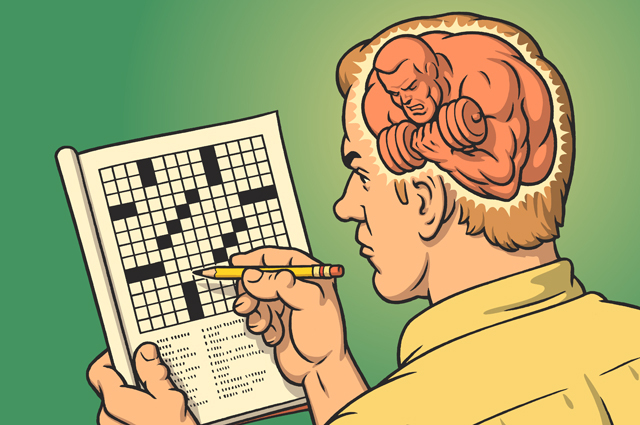
It may sound cliché, but the truth is if we don’t use our brains, we are more likely to lose them.
The brain thrives on sensory stimulation. It’s designed to absorb new information from its environment and build neural connections based on what it learns from those experiences.
For example, a baby’s mind is like a sponge, constantly absorbing new information from the environment and making new connections. That’s why they are such fast learners.
However, as we grow older our brains tend to become less receptive to learning new information.
By the age of 40, genes that are associated with learning and neuroplasticity tend to shut down. And by the time we reach the age of 65 or older, the chemicals in our brain begin to make dramatic changes, such as decreases in serotonin, dopamine, and glutamate, all which are important for healthy brain functioning. The grey matter in our brains also begins to thin.
As a result of these physical changes in the brain, many people experience age-related declines in cognitive ability. In addition, individuals 65 and older have a one in 8 chance of developing age-related dementia, such as Alzheimer’s Disease, which severely inhibits your ability to think rationally, solve problems, learn new things, and form memories.
Fortunately, there are effective ways we can prevent these declines in cognition, learning, and memory – and perhaps even improve them as we get older.
The term “cognitive reserve” refers to one’s ability to maintain cognitive abilities despite an aging brain. Research has found several key factors that are associated with keeping our brains fit into old age.
Here are the main guidelines in keeping your mind sharp.
Challenge your brain
Research makes it clear that challenging ourselves is one of the most effective ways to maintain brain fitness. In 2009, an study published in Neurology found that late-life “cognitive stimulating” activities helped maintain cognition and delay the onset of dementia. These “cognitive stimulating” activities included reading, writing, playing games, and solving puzzles (such as crosswords or Sudokus).
In 2011, the World Alzheimer’s Report also discovered that other cognitive stimulating activities such as playing music, cooking, and having lively discussions with others could also improve cognition in those who already have dementia. A study published in Archives of Neurology found that these kinds of activities helped reduce β-amyloid protein, which is the major part of the amyloid plaque in Alzheimer disease.
There are a many number of ways you can challenge your brain, such as:
- Learn a new hobby (like woodwork or knitting).
- Read books (especially ones about subjects you don’t know anything about).
- Debate others on a hot issue (but keep it rational and not too emotional).
- Try out fun “brain training” programs such as Brain Workshop.
- Be more creative, such as playing music, painting, writing, or cooking.
- Solve puzzles, such as crosswords or Sudokus.
- Play strategy-based video games.
- Learn a new language (studies show it can have many cognitive benefits).
These are just some suggestions on ways to continuously challenge your brain, but obviously there are many other ways too. As a general rule, trying anything new is going to help your brain grow and respond in novel ways.
Enrich your environment
Another big way to maintain cognitive fitness is to surround yourself in enriching environments. Research has found that individuals who are in more stimulating environments show bigger brains and more synaptic connections than those who are in less stimulating environments.
This was first discovered in 1947 when psychologist Donald Hebb found that rats who were raised as pets performed better on problem-solving tests than rats who were raised in cages. In 1960, Mark Rosenzweig followed up this research and found rats who were raised in cages with toys, tunnels, and running wheels showed increases in the size of their cerebral cortex (a part of the mammalian brain which plays a key role in learning and memory) when compared to rats who were raised in normal cages.
Today psychologists know that enriched environments can help reduce cognitive impairment involved with normal aging, Alzheimer’s Disease, Autism, prenatal stress, and a variety of other physical and mental health conditions.
Some examples of more stimulating environments may include spending more time in nature, museums, concerts, and other events. It will also help to change up your home and office environment every now and then, maybe by putting up new decorations or moving furniture.
Creating new surroundings is a great way to keep your brain active and learning new things.
Be social
In 1960, Harry Harlow discovered that when infant monkeys were partially or completely deprived from social engagement, they were less likely to develop normal cognitive and emotional functioning. In a more recent 2004 cross-cultural study published in Neurology, researchers found that individuals who had bigger social networks and who were involved in more social engagement showed less cognitive decline into old age.
This evidence suggests that a rich social life is important to a healthy brain. Which is not too surprising, since our brains have evolved to make us a very social species.
Some good ways to be more social include:
- Joining some kind of gym, club, or community center with a friend.
- Taking a class or workshop in something new you want to learn.
- Putting together a band.
- Joining a sports league.
- Inviting a friend or family member to a restaurant or movie.
- Call an old friend you haven’t spoken to in awhile.
- Join an online community, message board, or social network.
- Find a “Meetup group” of interest at Meetup.com.
- Use a site like OK Cupid to find a significant other.
A lot of these are good for brain fitness for many reasons, but especially because they are quality spent social time.
If you are not very social, consider starting small by only hanging out more with family or close friends.
Eat healthy and exercise
Another huge part of maintaining a healthy brain is exercising and eating right.
Omega-3 fatty acids in particular have shown to be associated with improved mood and cognition. You can find a lot of Omega-3 in grass-fed meat, eggs, fish, and nuts. Another important feature of a healthy diet is protective antioxidants, which can be found in many fruits, vegetables, and green tea. Blueberries and strawberries, for example, have shown to improve memory and cognition by cleaning out toxins in the brain that cause age-related memory loss and mental decline.
Exercise has also shown to be an important part of healthy brain functioning. For example, one thing psychologists found was that exercise during childhood led to a faster rate of cognitive development. Children who were physically inactive tended to perform worse on academic exams and neuropsychological tests, while children who exercised showed improvements in memory, attention, and decision-making.
Enter your email to stay updated on new articles in self improvement: