Psychology and Self Improvement
Categories: Psychology, Spirituality | 14 Comments


This is not intended to be a religious post, though it might ruffle some feathers of atheists who I know read this blog.

I believe there is a strong psychological power in using words like “God” and “prayer,” and I often use this kind of language to facilitate my own personal development.

I consider prayer a form of self-hypnosis. It’s a way to connect with our inner agent of change – our “God” (if you so wish to call it that), and in return we can use these powerful words and symbols to motivate ourselves to be better people.

About a year ago I was going through some spiritual and emotional turmoil. By this time I had already been practicing self-hypnosis for a couple years, and I was contemplating ways to make my practice more effective.

Before we begin, I should probably explain what hypnosis is to me. Hypnosis is primarily about language and the meaning behind language. Specifically, it deals with how we communicate ideas and suggestions to both ourselves and others.

For example, when someone is “highly suggestible,” a hypnotist can give a direct order and the person will probably act them out. They may suggest you “cluck like a chicken” and if you are suggestible enough you will follow through and pretend you are a chicken. Highly suggestible people make for great entertainment during staged shows.

However, hypnosis can also do something much deeper than just get people imagining weird scenarios and acting them out for fun. It can be an agent of real and powerful change that can greatly improve our lives.


A daily prayer is like a daily affirmation.

One of the most popular techniques in personal development literature is the use of affirmations. An affirmation is a suggestion you say to yourself on a frequent basis in hopes of creating a positive change in your life. Similar to a prayer.

For example, someone who has a short temper may want to use the affirmation: “I will be more calm and understanding when dealing with others.”

If they say this on a daily basis, with a clear focus and strong intent, they may find themselves acting more calmly and understanding to others. That is how affirmations work in a nutshell.

One of the books that first popularized the use of affirmations was Napoleon Hill’s “Think and Grow Rich,” which was first published in 1937 (if you have ever read a personal development book ever, than you have certainly heard of this book).

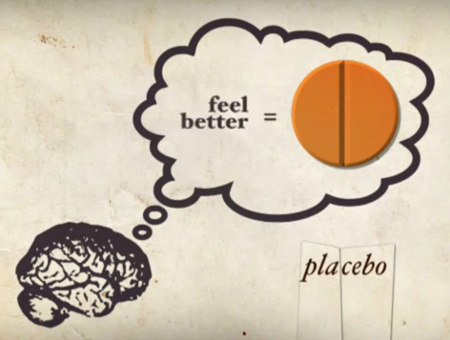
However, the real origins of affirmations can probably be traced back to 19th century psychiatrist Émile Coué, discoverer of the placebo effect. (Coué noticed that he could improve the effectiveness of a drug by praising its effectiveness to his patients – another form of hypnosis or suggestion, but I’ll have to get more into this in later posts).

Coué’s famous affirmation was known as The Coué Method, which stated: “Everyday, in every way, I am getting better and better.” This was arguably one of the first affirmations, and it marked the beginning of personal development as we know it today.


Prayers are affirmation on steroids.

There is a lot of crap today about how to do affirmations. Some say as long as you read it 100 times a day and drill it in your head that they will work. I disagree. A meaningless affirmation repeated over and over won’t get you anywhere.

In order for any kind of suggestion to work, it must mean something and you must believe in its effectiveness.

If you go to Google searching for “daily affirmations,” you can find plenty that can help. However, the best affirmations are the one’s that come from your own creation, because they are the ones that are most meaningful to you – and that’s what really counts.

Similarly, in Thich Nhat Hanh’s book The Energy of Prayer, he emphasizes that a prayer is most effective when we don’t see its power as separate from ourselves, but a power that comes from within.

This is why I recommend you write your own prayers, which is really nothing more than a series of affirmations that best suit you and your goals.


An example of a prayer I wrote.

I’m going to write something on the spot, right now, to give you an idea of how your prayer might look when you are finished.

Let’s pretend I’m writing a prayer to help me improve my health.

    Dear God,

    Please give me the awareness and strength to make healthier decisions.

    Before a meal, give me the awareness to know what I should and shouldn’t eat.

    Throughout the day, give me the strength to exercise and stay fit.

    Never let me forget that my body and mind are one,

    And I must take care of both.

    Thank you.


Okay, so I literally wrote this up in a minute, but the effect won’t occur unless I take this prayer seriously and read it on a daily basis.

The advice is simple and commonsense, but a quick reminder like this can help me cultivate healthier habits and take better care of myself throughout the day.


Here are some tips for making your daily prayer more effective:

  • Use language that is meaningful to you.
  • Words like “awareness” and “strength” are important to me when trying to act healthier, so I made sure to include both in the prayer.

  • Make your intentions clear.
  • You don’t want to send yourself mixed signals. Make sure you know exactly what you are aiming to achieve.

  • Be focused when you recite your prayer.
  • Don’t just rush through your prayer. Minimize distractions and recite it with a clear and focused mind.

  • Make it a long prayer or repeat certain lines.
  • My prayer was short, but I could have myself repeat it 3-5 times to amplify the effect. In the past, I have written much longer prayers, and this helps me to convey an even clearer message about what I want to change.

  • Repeat it on a frequent basis.
  • Optimally, once or twice a day is best. But even just a weekly reminder can help reinstate your motive going into the next week.


Internal change vs. External demands


Some of you reading this may find this advice similar to Rhonda Byrne’s The Secret. However, I think there is an important distinction that needs to be made when talking about intentions and intention-manifesting.

Like I said earlier, the power of prayer is not something outside of ourselves. When we pray, we are not demanding something from the universe, but stimulating a change in ourselves to make things happen.

Sitting in a room all day praying cannot make you more healthy or wealthy all by itself. The idea is to change your mind first, and then your actions will follow.

You will know when your prayers are effective based on the results you get through your speech and behavior. If your prayer isn’t changing the way you act, then you need to change the way you pray.


Join my newsletter.


If you appreciated reading this, I invite you to join my newsletter to stay updated on new content. I also want to conduct some workshops in the near future on mental health and achieving your goals, and those on my newsletter will be the first to hear of the news (and get some discounts on top of that).

As always, thanks for your time.


Image by Cristine

Categories: Personal Development, Psychology | 17 Comments


In this post I want to show you how to create your own hypnosis audio as an exercise in personal development.


Materials needed

  • Some kind of microphone, MP3 recorder, or way of recording your voice.
  • Basic audio editing software (Audacity is a popular free one. There are probably some options that come with your computer too – I used Garageband.)
  • If you already have some talent with music feel free to incorporate that.


What is hypnosis?

Think of hypnosis as nothing more than suggestion. Whether you are talking to a friend, listening to something on the radio, watching a movie, or just thinking a thought – you are being suggested some sort of idea.

Bad hypnosis is when the suggestion doesn’t hook. It goes in one ear and out the other and we remain unaffected. Maybe we were just too bored or apathetic to really pay attention to what was being suggested or our critical mind found the suggestion to be bogus.

Good hypnosis is when a suggestion captivates you and creates a change. It is like being moved by a really compelling movie. Anything that peaks your interest and makes you tune in more intently can be considered a form of good hypnosis, like a compelling speech or even watching the World Series. It concentrates your attention and keeps your mind engaged.


How do affirmations relate to hypnosis?

A popular form of hypnosis within the personal development niche is affirmations. When the technique was first introduced as a tool for psychotherapy by Emile Coue in the late 19th century, when it was first called autosuggestion.

If you don’t yet know what an affirmation is it is basically this: you create suggestions for yourself towards certain changes in feelings, thoughts, or behaviors. For example:

  • I will be more friendly to people I don’t know.
  • I will try not to overreact when I get angry.
  • I will spend more time at the gym.
  • I will pay better attention to my eating habits.

These are all affirmations but you can structure them in all kinds of different ways. Different language patterns may be more or less effective depending on the suggestion and the person being suggested to. Since you are writing your own suggestions, you should experiment and find what ways work best for you.


Writing your own script

What types of suggestions do you think will work best on you? This part takes a bit of experimentation and practice. You won’t necessarily nail it your first short.

Some people are more suggestible when they are being directly commanded to do something: “Be a better listener! Study more! Watch less TV!”

Other people are more suggestible when they are given options to compare, “Imagine what your grades would be like if you didn’t study more? Now, imagine what your grades would be like if you did study more?” This is called an indirect suggestion – because there is an implicit message that your grades would most likely be better if you studied more.

For your first script, I recommend trying out both direct and indirect suggestions. Don’t be afraid to also incorporate things to visualize by starting sentences with,

  • “Picture this….”
  • “Visualize that…”
  • “Imagine if…”
  • “See what happens when….”

The more vivid you make your suggestions, the more captivating and effective they will be. People who have a naturally tendency towards good story telling or a strong imagination will have a distinct advantages over those who don’t – but it is a skill that we can all develop with practice.

Try to make your first script a good 2-3 pages, double spaced, 12 sized font. This should make your hypnosis track about 5-7 minutes if you pace your delivery appropriately. You can structure the script in different ways or you can make it more stream-of-conscious – it really depends on the message you want to get across. Some scripts are designed to drive home a single point or lesson, while others are designed to simply develop a general good sense of well-being and motivation.


The voice and delivery

Voice and delivery can be important in how suggestible your message is but again it depends on the type of suggestion and also the person being suggested to. Your tone matters. For example you wouldn’t want to screech out “Relax!!!” when you want someone to be in a relaxed state. Similarly you don’t want to have a boring and apathetic voice when you say, “Be sexy and fun around others!”

Experiment, experiment, experiment! Sometimes listening to a slow and drone-y voice can heighten your trance, while other times it can put you to sleep. You don’t want to fall asleep. You want to be engaged. Hypnosis is most effective when it is an adventure. Add different colors and dynamics to your voice to amplify the importance of the message and keep your attention fixated.

When you read the script (or even if you are doing an impromptu script) you want to role play the experience as you speak it. You want to be there as you tell the story. The more engaged you are when you deliver, the more engaged you will be when you listen back. It is just a basic rule of all good communication.


How to butter up your final product

Once you are done recording the main script, there are certain things you can do to make the listen even more attractive and enjoyable.

You could add music that compliments the message. Good music for hypnosis should fit well in the background and not take away from the language of the track. It should be designed to create a certain mood or feeling. Sometimes a sense of inspiration or awe can make the strongest impression.

You can create another overlaying script. Often practiced in the form of “dual induction hypnosis,” it is when two hypnotists are giving suggestions at the same time. With the wonders of modern technology, you can create a dual induction all by yourself. With some basic audio editing you can even pan one voice to the left and the other voice to the right. So you will have a different exchange of suggestions going into each ear. This can be used as a way to create stimulus overload, often resulting in confusion, which is a very great way to amplify trance states.

Add effects to the voices. A little bit of echo and reverb never hurt anyone. Sure, it may make your voice sound like some robot from a cheesy 80s scifi movie, but it can make your voice easier to listen to and be fixated on. For “edginess” you can add some distortion or flanger. Most basic audio-editing softwares (including Audacity which I recommended above) have some pre-packaged effects that you should be able to use.

Do panning and volume changes throughout the track. This may be something that only experienced audiophiles can do, but by having your voice shifting between speakers and changing volumes is one really fantastic way to keep your track engaging.


My example

You can download my first attempt here (approx: 10:20, 14mb) . My original intention was to do a dual induction: with self-improvement suggestions on one side and world-improvement suggestions on the other side.

I didn’t write a script for this one, just recorded each track individually, stream-of-consciousness. Each recording was 10 minutes and then I just overlapped them and added some reverb, echo, and distortion (only because I felt my voice sounded too dry and weak without the effects).

After the scripts were recorded I created a simple synthesizer sample using Reason (it is a program for electronic music makers). I basically improvised an organ/space-y synth sound to go with the suggestions.

Things I learned to help improve future recordings:

  • I need to make my voice more animated.
  • The music is a bit cheesy and simple, but it does have an interesting drone/trance-inducing effect.
  • Because I didn’t write a script, the message of the audio is a bit scattered and incoherent. Creating this kind of confusion isn’t necessarily bad for creating a hypnotic effect, but writing a script with something more coherent and structured is usually better.
  • There will always be room for improvement whether it be writing better scripts, stronger vocal delivery, or even becoming a more intent listener to the final product.

Things I learned from the creative process in general:

  • Making your own self-hypnosis tracks can be really fun.
  • The act of putting together the project in-itself is a great exercise in personal development.
  • It is a great way to express yourself.


Listen to it

Once you finish your creation you will probably be eager to listen (and re-listen) to it. I recommend doing this whenever you have time set aside to let go of your earthly obligations; it could be early in the morning before you get to work or late at night before bed.

Try listening to it every other day for a week and then continue with it on a weekly basis. Consider it your daily mantra or prayer, a healthy reminder of the things that matter to you in life and the things you want to improve.

Don’t be afraid to also listen to it with a critical eye. Jot down some ways you can improve your next recording. Pay extra attention to which suggestions “clicked” with you and which ones just passed by. Work on developing better language, better delivery, and more colorful and dynamic tracks. Follow these principles and you will be the king of your world in no time. I mean it.

Image Credit


Join my newsletter for more!

Categories: Personal Development, Psychology | 4 Comments

Émile Coué, a French psychologist and pharmacist in the late 19th century, was one of the first individuals to make use of optimistic autosuggestion as a popular form of psychotherapy and self-improvement.

His most famous method – the Coué Method – involved saying the positive affirmation, “Everyday, in every way, I am getting better and better” at the beginning and end of each day. It was meant to be repeated in a clear and focused state of mind.

Coué believed that through the use of autosuggestion and imagination an individual could motivate their self to better living habits and health. Émile Coué noticed that he could improve the effectiveness of a drug by praising its effectiveness to his patients. This discovery eventually became known as the placebo effect.

null

These kinds of findings turned Coué’s interests towards hypnosis and digging deeper into the nature of suggestion. Coué observed that the main obstacle to hypnosis and autosuggestion was willpower; in order for the suggestions to be most effective the individual had to reserve judgment and accept the suggestion based on an element of faith.

This could explain why hypnosis can be so hard to study reliably using the scientific method. Because each individual has their own degrees of suggestibility, and the hypnosis-patient relationship is so crucial to the effectiveness of the treatment; which makes it difficult to establish a good control group.

null

The power of suggestion has proven to play a huge yet perplexing and largely unexplained role in human psychology. According to a recent article by Wired Magazine, placebo drugs have been getting more effective over time. Perhaps this is due to society’s growing acceptance of pills as a convenient “cure-all” for all of our problems? On a related note, one blog by a U.K. neuroscientist even reports on placebo side effects, which could theoretically account for some of the side effects common in various medical treatments, not just psycho-pharmaceuticals.

It seems only natural that with all of this evidence on the power of suggestion that scientists should begin to seek what factors play a role in making a particular suggestion powerful. Hypnosis should not just be seen as a tool that only works on “highly suggestible” persons, but also a tool that can be learned and applied by everyone.

Coué himself claimed that he was not a healer, but one who taught others how to heal themselves. To read more about Émile Coué I highly recommend this blog entry by UK Hypnosis, which gives a very fascinating and in-depth analysis to Coué’s practices.


Categories: Psychology | 2 Comments

null


Hypnosis is a set of effective communication techniques for shaping one’s beliefs, attitudes, thought-patterns, and behaviors. Often these communication techniques take advantage of direct or indirect suggestions, of which a participant may accept or deny, depending on their own free will or “condition of suggestibility.”

Hypnosis shouldn’t be associated with a particular state of consciousness or awareness. Different uses of hypnosis may call upon different mental states. A patient in hypnotherapy may be put in a deep sleep or trance state in order for the therapist to have better communicative-access to a patient’s subconscious mind; but a stage hypnotist allows his or her participants to keep their awareness focused outwards within one’s environment. Some hypnosis plays upon the imaginative and generative faculties of the mind, while other hypnosis utilizes the exploratory and perceptive faculties of the mind. So, there is no one mental “state” that hypnosis can be really associated to – this is why I keep its definition strictly in the realm of communication.

A hypnotist is essentially no different than a good communicator. A hypnotist must have a good sense of flexibility in his or her vocabulary, tone of voice, and body language in order to be the best communicator he or she can be. In other words, a suggestion that works on one individual does not necessarily work on another individual. This is due to the inherit subjective nature of language, meaning, and communication. There are some hypnosis techniques that are specifically designed to elicit this subjective information from the patient, and using this information a hypnotist can gain a better strategy on how to effectively communicate to that individual. Elicitation strategies are not always used by hypnotists, but they are especially common for hypnotherapists – those who are trying to reshape a participant’s underlying beliefs, attitudes, and thought patterns regarding a situation.

Stage hypnotists don’t need to do these elicitation strategies since many participants are volunteers and thus already have a high suggestibility or willingness to “play along” with the hypnotist. Another thing that plays a strong role in suggestibility during hypnosis shows is the social role of the hypnotist: he is the star and leader of the show, he has a certain aura of command within the room. Thus, it is easy to find obedient participants. And of course – these participants almost always have a fun time participating and using their imagination during hypnotist shows, so the entertainment aspect of hypnosis itself is always an enticing suggestion.

How do suggestions work?

Suggestions can work in the same multitude of ways in which we can learn. This can be through story-telling, analogies, asking questions, giving commands, providing information, evoking the imagination, encouraging contemplation, or a person’s body mannerisms and body posture – all of these are different mediums in which a suggestion can take place.

A third party does not even need to be present in order for a suggestion to be suggested. Instead, an individual may even suggest something to their own self and then try to convince this self that this suggestion is the right thing to do. This interaction is typically the conscious self speaking with the unconscious self. The unconscious self is best communicated to when it is brought into consciousness – this is why it is typically called “subconscious” (which is just a useful term for: mental activity than can be brought into conscious awareness. This is mental activity that is often ignored by the conscious mind, despite the role it plays in our thoughts and behaviors). Another way to describe it is our “conditioned self.” It is responsible for those actions we do that we continue doing, without question, because they have become second-nature.

Some hypnotists believe that all hypnosis is self-hypnosis. In other words, the “suggestion” always originates in the mind of the individual in which it is being suggested, and then from there the individual either accepts or declines the suggestion.

The environment plays an important role in suggestibility as well. If a hypnotist tells you over a YouTube video to quack like a chicken it may not be as effective then if you were in front of a live audience who are all waiting for you to respond as a chicken. In reality, this is little more than social pressure and conformity, but it is all suggestion when it comes to the world of hypnosis. A good hypnotist must therefore keep a strong mind on the environment, and the varying ways this can affect a particular person’s response to a suggestion.

What effects the degree of suggestibility?

    A. The individuals preconditioned “map of the world.” In other words, his or her preconceived concepts, language tendencies, thought-patterns, attitudes, and behavioral tendencies to a given subject or situation.

    B. The environment in which the suggestion is being given (You wouldn’t take a puff of a blunt right in front of grandma, but you might do it in the presence of a bunch of your friends).

    C. The delivery of the suggestion: using effective verbal and reasoning skills, appropriate vocal tone, and congruent body language.

How can a hypnotist get better at giving suggestions and being an effective hypnotist?

    A. Be a good listener. Pay attention to others’ word patterns and language tendencies.

    B. Pay attention to universals behind the meaning of body language and posture.

    C. Read up on psychology, how the mind learns and creates associations, and how the mind and its environment interact.

    D. Keep practicing and gaining new experience. Experiment with different delivery styles and develop your own kind of niche for communicating effectively with others.